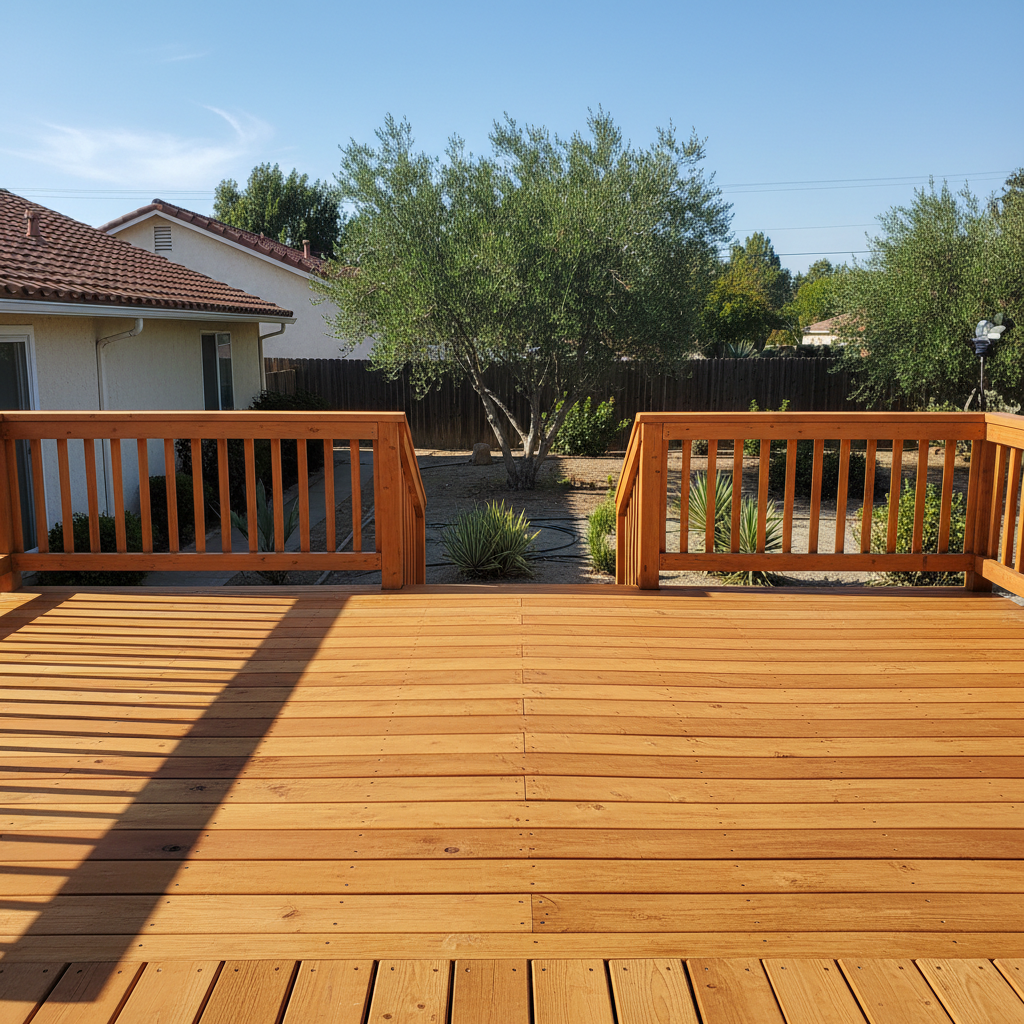
Alright, let's talk decks. You've got one, or you're thinking about getting one, and you want it to last. That's smart. A deck isn't just a pretty addition; it's an extension of your home, a place for family, friends, and those quiet morning coffees. But just like anything else, it needs a little love to stay in top shape, especially with our Central Valley weather doing its thing.
Extending Your Deck's Lifespan: It's All About Protection
You want your deck to stick around for the long haul, right? The biggest thing you can do to extend its life is protect it from the elements. Here in Clovis, that means dealing with intense sun, dry heat, and then those occasional heavy winter rains. It's a tough environment for wood.
First off, a good quality stain or sealant is your deck's best friend. I'm not just talking about making it look nice; I'm talking about a barrier. It's going to protect the wood from UV rays, which can dry it out, cause cracking, and fade the color. It also helps repel water, preventing rot and mildew. Think of it like sunscreen for your deck. You wouldn't go out in July without it, and neither should your deck.
Another thing people often overlook is proper drainage. Make sure water isn't pooling on your deck or around its posts. If you've got planters sitting directly on the deck, lift them up a bit with pot feet so water can drain and air can circulate underneath. Same goes for furniture; don't let water sit under cushions or heavy bases for long periods. Our soil here, especially in some of the older neighborhoods like around Old Town, can get really compacted, so good drainage around the deck footings is critical to prevent moisture from wicking up.
Finally, keep an eye on vegetation. Trim back any bushes or trees that are constantly shading parts of your deck or dropping a lot of leaves and debris. That stuff holds moisture, and moisture is the enemy of wood.
Regular Maintenance: Simple Steps, Big Impact
You don't need to spend every weekend fussing over your deck, but a little regular attention goes a long way. Here's what I tell my clients:
- Clean it regularly: Sweep off leaves, dirt, and debris at least once a month, more often if you've got trees nearby. This prevents organic matter from breaking down and holding moisture against the wood.
- Wash it annually: A good wash once a year, usually in the spring, is a must. Use a deck cleaner specifically designed for your deck material (wood, composite, etc.) and a stiff brush. A pressure washer can be great, but be careful! Too much pressure can damage the wood fibers, especially on older decks. If you're not sure, start with the lowest setting and work your way up, or just stick to a garden hose and brush.
- Check your fasteners: Over time, screws and nails can work their way loose, especially with our temperature swings causing wood to expand and contract. Walk around, check for any popped nails or loose screws. Tap them back in or tighten them up. If a screw head is stripped, replace it.
- Inspect for rot: Pay close attention to areas that stay wet longer, like around railings, steps, and where the deck meets the house. Poke the wood with a screwdriver; if it feels soft or spongy, that's a red flag.
- Reapply finish as needed: Depending on the type of stain or sealant you used, you'll need to reapply it every 1-3 years. You'll know it's time when water stops beading up on the surface and starts soaking into the wood.
Warning Signs: Don't Ignore These Red Flags
Your deck will usually tell you when something's wrong, you just need to know what to look for. Ignoring these signs can turn a small fix into a major repair, or worse, a safety hazard.
- Wobbly railings or posts: This is a big one. If your railings feel loose when you lean on them, or if the support posts for the deck itself seem to be shifting, that's an immediate safety concern. Don't put it off.
- Cracked or splintered boards: A few small cracks are normal, but large, deep cracks or widespread splintering can indicate the wood is drying out excessively or losing its structural integrity. Splinters are also a hazard for bare feet!
- Soft or spongy wood: As I mentioned, rot is serious. If you step on a board and it feels soft or gives way, or if you can easily push a screwdriver into the wood, you've got rot. This often happens near the ground, where posts meet concrete, or in areas that stay damp.
- Sagging or uneven surfaces: If your deck starts to look like a roller coaster, with some sections dipping or rising, it could mean foundation issues, failing joists, or weakened support beams. This isn't just cosmetic; it's structural.
- Mold or mildew that won't go away: While a little surface mildew can be cleaned, if it's persistent, deep-seated, or accompanied by a musty smell, it could be a sign of constant moisture issues and potential rot underneath.
- Rusting fasteners or hardware: If the screws, nails, or metal connectors are heavily rusted, they're losing their strength. This is especially true for the connectors holding joists to beams or ledger boards to the house.
When to Call a Professional (Like Us at Clovis Deck & Porch)
Look, I'm a big believer in homeowners doing what they can. But there are definitely times when you need to bring in the pros. Don't be a hero when safety is on the line.
You should call us, or another reputable contractor, if:
- You see significant structural damage: If beams are cracked, posts are rotted at the base, or the ledger board (the part connecting the deck to your house) looks compromised, that's beyond a DIY fix. This stuff needs to be done right for safety.
- There's widespread rot: A small patch of rot on a single board might be manageable, but if it's spread across multiple boards, joists, or posts, you're looking at a bigger project than you probably want to tackle.
- You're unsure about the cause of a problem: If you see a warning sign but can't figure out why it's happening, or what the best fix is, get an expert opinion. Sometimes what looks like a simple issue is a symptom of something more serious.
- You don't have the right tools or experience: Some repairs require specialized tools or specific construction knowledge to ensure they're done safely and up to code. Don't guess when it comes to your deck's integrity.
- You're just too busy: Life gets hectic. If you know your deck needs attention but you just don't have the time or energy, it's worth it to hire someone. It'll save you stress and ensure the job gets done right.
Your deck is an investment in your home and your lifestyle. A little proactive maintenance and knowing when to call for help will keep it safe, beautiful, and functional for many years to come. Don't wait until a small problem becomes a big, expensive headache.