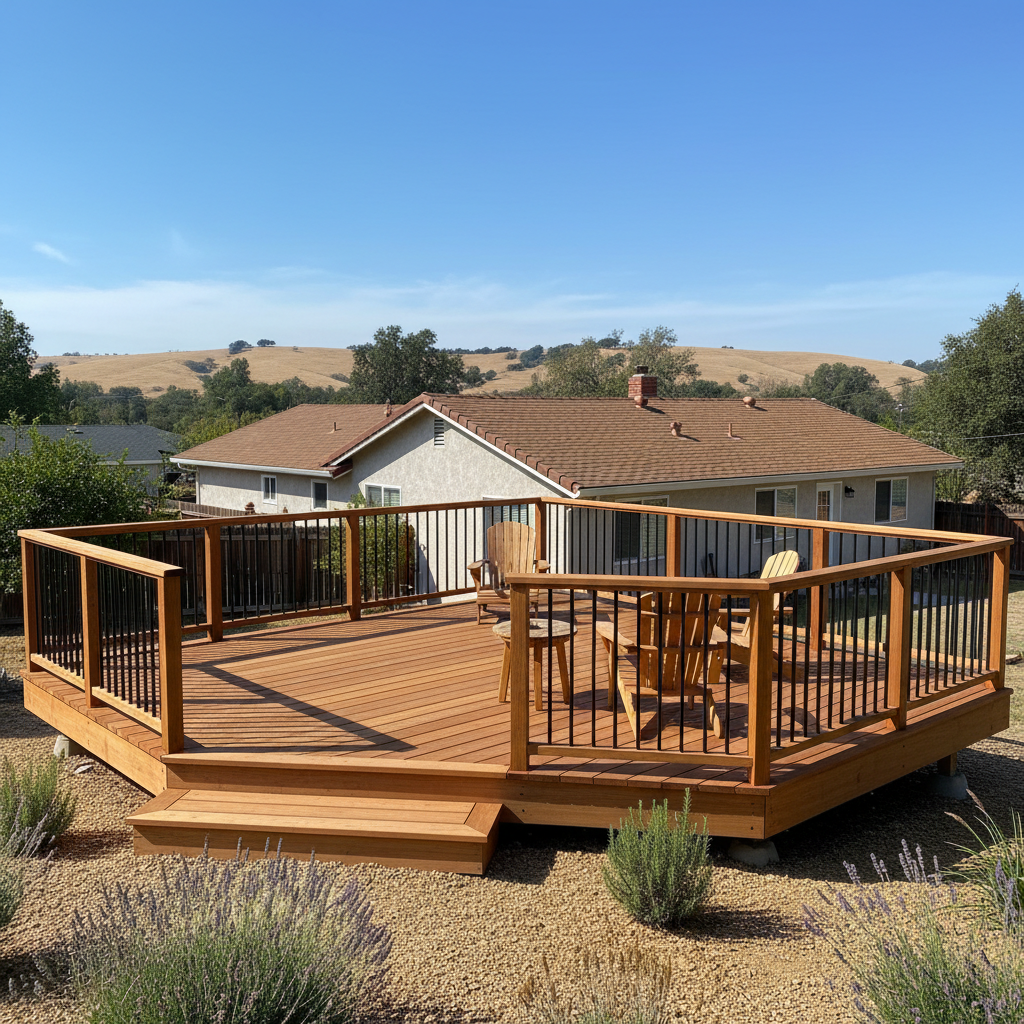
So, you're dreaming of a new deck out back, huh? Maybe a spot for the BBQ, or just somewhere nice to kick back and watch the kids play. That's a great idea, especially with our long Clovis summers. But before you get too far into picking out furniture, you're probably wondering, "How much is this actually gonna cost me?"
It's a fair question, and honestly, it's one of the first things folks ask me. There's no single answer, of course, but I can break down what affects the price, give you some realistic numbers for our area, and tell you how to make sure you're getting a good deal without cutting corners.
What Makes Deck Prices Jump Around?
A deck isn't just a flat piece of wood. A lot goes into it, and each choice you make can swing the final price tag quite a bit. Here are the big players:
- Size and Shape: This is probably the most obvious one. A small, simple 10x10 square deck is going to be way cheaper than a sprawling 20x30 multi-level design with curves and built-in benches. More square footage means more materials, more labor, and often more complex engineering.
- Materials: This is huge. Are we talking pressure-treated pine, redwood, cedar, or a composite material like Trex or AZEK? Pressure-treated pine is your most budget-friendly option, while redwood and cedar are a step up. Composites are often the most expensive upfront, but they last a long time with very little maintenance, which saves you money down the road. I've seen a lot of folks in the Old Town Clovis area go for redwood because it fits that classic look so well, but composites are gaining ground everywhere for their durability against our intense sun.
- Height and Complexity: Is your deck just a few inches off the ground, or are we building a second-story deck that needs serious structural support and railings? Higher decks require more robust framing, taller posts, and often more intricate stairs and railings, all of which add to the cost. Multi-level designs or decks built around existing features like trees also add complexity.
- Railing Type: Don't forget the railings! Standard wood pickets are the most common and affordable. But if you want something fancier like aluminum balusters, glass panels, or cable railings, expect to pay more. These can really elevate the look, but they come at a premium.
- Foundation and Site Prep: This is often overlooked. If your yard slopes, or if we hit a bunch of rocks when digging for footings (which happens more than you'd think in some of the older parts of Clovis with that hardpan soil), that adds time and effort. Proper drainage and a solid foundation are non-negotiable for a deck that lasts.
- Permits and Inspections: Yes, you need permits for most decks here in Clovis. This isn't just a formality; it ensures your deck is built to code and safe. The cost of permits themselves isn't usually a huge part of the total, but the time spent on drawings, applications, and inspections is factored into a contractor's overall bid.
Typical Deck Cost Ranges in Clovis
Alright, let's get down to some numbers. Keep in mind these are averages, and your specific project could be higher or lower depending on all those factors I just mentioned. These prices usually include materials, labor, and standard permits.
- Basic Pressure-Treated Pine Deck (10x12 to 12x16 ft): For a simple, ground-level or low-height deck with basic wood railings, you're generally looking at $35 - $55 per square foot. So, a 12x12 (144 sq ft) deck might run you anywhere from $5,040 to $7,920. This is your entry-level option, good for a small gathering space.
- Mid-Range Redwood or Cedar Deck (12x16 to 16x20 ft): If you want a nicer wood or a slightly larger, maybe elevated deck with a bit more detail, expect to pay $55 - $85 per square foot. A 15x18 (270 sq ft) deck in this range could be $14,850 to $22,950. These decks offer better aesthetics and often a longer lifespan than basic pine.
- Premium Composite Deck (16x20 to 20x30+ ft): For a high-end composite deck, potentially multi-level, with premium railings (like aluminum or cable) and perhaps some built-in features, you're typically looking at $85 - $120+ per square foot. A 20x25 (500 sq ft) composite deck could easily be $42,500 to $60,000 or more. These are built for maximum durability, minimal maintenance, and often include more custom design elements.
Remember, these are just starting points. A complex design, difficult site access, or custom features like built-in lighting, pergolas, or outdoor kitchens will push these numbers up.
What Should Be in Your Deck Quote?
When you get a quote from a contractor, it shouldn't just be a single number. A good, detailed quote will lay out exactly what you're paying for. Here's what I always include in my quotes at Clovis Deck & Porch:
- Detailed Scope of Work: This describes exactly what we're building – size, height, number of stairs, type of railing, specific materials for decking, framing, and footings.
- Material Breakdown: A list of the primary materials, specifying brand and type (e.g., "Trex Enhance Naturals Decking - Coastal Bluff").
- Labor Costs: This covers the crew's time for demolition (if needed), framing, decking, railing installation, and cleanup.
- Permit Fees: The estimated or actual cost of obtaining necessary building permits from the City of Clovis.
- Site Preparation: Any work needed to get the site ready, like grading or minor excavation.
- Cleanup and Debris Removal: We don't leave a mess behind. This covers hauling away all construction waste.
- Warranty Information: What kind of warranty you get on the workmanship.
- Payment Schedule: When payments are due throughout the project.
If a quote is just a single line item, walk away. You need to know what you're getting for your money.
How to Avoid Overpaying for Your Deck
Nobody wants to feel like they got ripped off, especially on a big project like a deck. Here's how to be smart about it:
- Get Multiple Bids: Don't just go with the first contractor you talk to. Get at least three detailed quotes. This helps you compare not just price, but also the proposed materials and scope of work. Just make sure you're comparing apples to apples – if one bid is way lower, check what they might be leaving out.
- Be Clear About Your Vision: The more specific you are about what you want, the more accurate the quotes will be. Bring pictures, sketches, and a list of your must-haves versus nice-to-haves.
- Ask About Experience and References: A contractor who specializes in decks is usually a better bet than a general handyman. Ask for references and check out their past work. You want someone who knows the local codes and has a good reputation right here in Clovis.
- Don't Be Afraid to Ask Questions: If something in a quote doesn't make sense, ask! A good contractor will be happy to explain everything.
- Consider Value, Not Just Price: The cheapest bid isn't always the best deal. A slightly higher price might mean better materials, more experienced craftsmanship, or a longer warranty. A deck is an investment, and you want it to last.
- Avoid Cash Deals without Contracts: Always get a written contract that outlines everything. It protects both you and the contractor.
Building a new deck is an exciting project, and it can really transform your outdoor living space. By understanding the costs and knowing what to look for in a contractor, you can make sure you get a beautiful, safe, and long-lasting deck without any nasty surprises.